AI-Accelerated Sage 300 Integration for Finance Teams
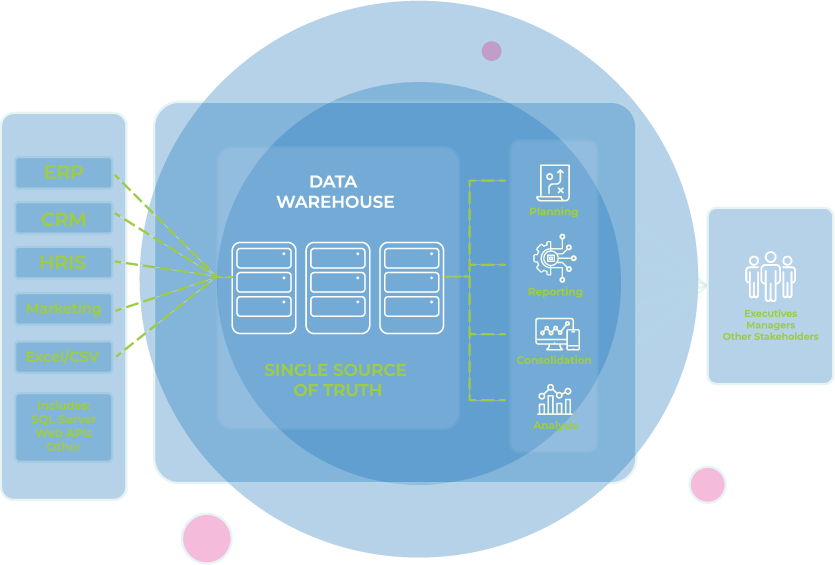
Solver extends Sage 300 with one cloud platform for budgeting, forecasting, reporting, and analysis. Connect through the Solver Gateway, design reports and budget forms in Excel, and bring your key data sources together in a single source of truth that informs decisions beyond the finance department.
Based on customer reviews on
![]()
Built for Sage 300, Linked by Solver Gateway
Organizations integrating Solver with Sage 300 use the Solver Gateway, a desktop application installed on a machine inside your network. It securely connects Solver to the Sage 300 data behind your firewall, so ERP data moves into Solver without manual file exports.
Provided Views to Speed Up Integration
Solver supplies ready-made SQL views and scripts for Sage 300, giving your team a faster way to build automated integrations that load ERP data into Solver.
Take the Sage 300 Tour
Explore an in-depth video series on what Solver offers and how its Sage 300 integration helps your team reach better decisions faster.
Six Reasons to Pair Solver with Sage 300
Familiar Excel design
Build reports and budget forms in Solver's Excel add-in, so your team works in a tool it already knows while the numbers stay connected to Sage 300.
Reporting from GL to sub-ledger
Produce general ledger and sub-ledger reports and dashboards for Sage 300, giving leaders both the summary view and the supporting detail.
One home for key data
Consolidate Sage 300 and your other key data sources into a single tool for streamlined reporting and analysis.
Driver-based budgets and forecasts
Replace time-consuming manual cycles with dynamic, driver-based budgeting and forecasting models.
Scenario modeling on demand
Model scenarios and run simulations to respond quickly to market shifts and improve prediction accuracy.
Dashboards anyone can read
Visualize complex data through easy-to-share graphs and dashboards that put insights in front of every team.
Control Costs with Clearer Financial Insight
Profitability Starts with Visibility.
Sage 300 is designed to keep total cost of ownership low, supporting multiple technologies, databases, and operating systems. Controlling costs across the business still depends on how quickly finance can convert ERP data into budgets, forecasts, and reports. Solver makes organizational data a strategic asset by managing budgets, forecasts, and detailed reporting in one place, so your team can act on cost and margin trends sooner.
Every Finance Workflow, Running on Sage 300 Data
Reporting, consolidation, budgeting, and analysis in one Excel-friendly platform.
-
Financial Reporting
-
GL and sub-ledger reports for Sage 300
-
Report and budget form design in Excel
-
Dashboards that support data-driven decisions
-
-
Financial Consolidation
-
Key data sources unified in a single tool
-
Sage 300 and non-ERP data side by side
-
Streamlined reporting and analysis
-
-
Budgeting & Forecasting
-
Dynamic, driver-based models
-
Automated budgeting and forecasting cycles
-
Scenario modeling and simulations
-
-
Analysis
-
What-if scenarios for financial strategy
-
Graphs and dashboards that are easy to share
-
Insights accessible organization-wide
-
Why Finance Teams Call Solver a Leader in FP&A
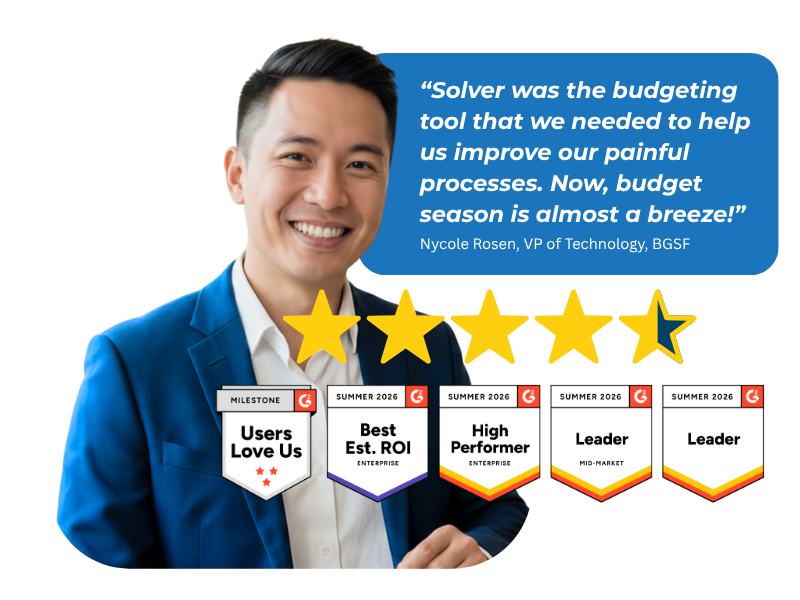
G2 users recognize Solver as a Leader for financial planning and analysis, with finance professionals across nonprofit, manufacturing, distribution, and dozens of other industries relying on it daily. Whether you're a mid-market team or a global enterprise, Solver gives you one platform to budget, report, consolidate, and analyze with confidence. Nycole Rosen, VP of Technology at BGSF, put it plainly: "Now, budget season is almost a breeze."
Solver for Sage 300 | Frequently Asked Questions
-
What does Solver add to Sage 300?
Solver adds extended financial planning and analysis (xFP&A) to Sage 300, formerly Sage ERP Accpac. It combines Sage 300 data with your other key data sources on one cloud platform, so finance teams can build reports, automate budgets and forecasts, model scenarios, and share dashboards from a single source of truth.
-
How is Solver different from Excel for Sage 300 reporting?
Solver keeps the Excel design experience your team knows and removes the manual workbook handling around it. Reports and budget forms draw on Sage 300 data loaded through the Solver Gateway rather than exported files, and results are shared through graphs and dashboards instead of spreadsheets passed between inboxes.
-
Can Solver report on Sage 300 sub-ledger data?
Yes. Solver supports both general ledger and sub-ledger reports and dashboards for Sage 300. Because Solver consolidates your key data sources into a single tool, you can also report on Sage 300 data alongside operational and non-ERP data for streamlined analysis across the organization.
-
How does Solver connect to Sage 300?
Solver connects to Sage 300 through the Solver Gateway, a desktop application installed on a machine in your network that securely links Solver to data behind your firewall. Solver provides SQL views for Sage 300, so your team can quickly create automated integrations that upload Sage 300 data into Solver.
-
How long does it take to implement Solver for Sage 300?
Provided views for Sage 300 help your team create integrations quickly through the Solver Gateway instead of building each connection from scratch. Your overall timeline depends on the number of entities, data sources, and custom models in scope. Your Solver team or implementation partner will confirm a timeline during scoping.
-
Can Solver automate budgeting and forecasting for Sage 300?
Yes. Solver replaces time-consuming budgeting and forecasting processes with dynamic, driver-based models. Finance teams can create what-if scenarios, run simulations, and compare strategies to respond quickly to market shifts, all using the same Sage 300 data that feeds their reports and dashboards.